.jpg)


A practical approach to evaluating, shaping, and delivering investment-ready vertical farming at scale
This article was guest written by Marisol Garfias. Business Development Manager at IGS. Marisol is passionate about the positive impact vertical farming technology can have towards creating more resilient food systems.
The benefits of vertical farming and how it can help combat food security challenges are well known. As a concept, the technology is generally well-recognised, however as the industry matures, it’s become clear that not every prospective idea translates into a viable project. To prevent disconnect between ambition and execution, it is vital that projects are held to a rigorous, framework-based approach.
We’ve been deploying our technology worldwide, speaking to both growers and entrepreneurs for well over a decade now. Based on this experience, we’ve developed a precise framework to evaluate opportunities through a commercial, operational, and strategic lens. We call this our FLOAT methodology.
What is FLOAT?
FLOAT is our core qualification framework, designed to ensure that projects are grounded in commercial reality before progressing to the next stage. It stands for:
- Finance – are funds secured or realistically attainable?
- Land – is there a suitable site secured to host the required infrastructure?
- Offtakers – are there customers ready to buy the final product?
- Authority – is there authority in place to move the project forward?
- Timing – what is driving the project timeline?
Across the world, we’re faced with major challenges around sustainability, food security, and scaling output to help feed an ever-growing global population. Having the ambition to overcome these challenges is one thing – and a noble motivation in itself – but having the required capital and infrastructure is another.
Successful projects often begin by looking to solve these issues, but the most credible can demonstrate a clear link between the solution and how they can turn it into a long-term, financially feasible operation. FLOAT exists to help determine these links.
Finance: turning capital into confidence
A prospective customer’s ability to acquire funding is the first thing that we look to assess. Thinking beyond initial costs, we look at factors such as ROI and the overall payback period. A strong prospect is defined not only by their access to capital, but by a clear understanding of how to translate it into the long-term value which defines a successful business venture. In practice, this means projects backed by realistic funding pathways that can give them wings.
Land: building out a clear business case
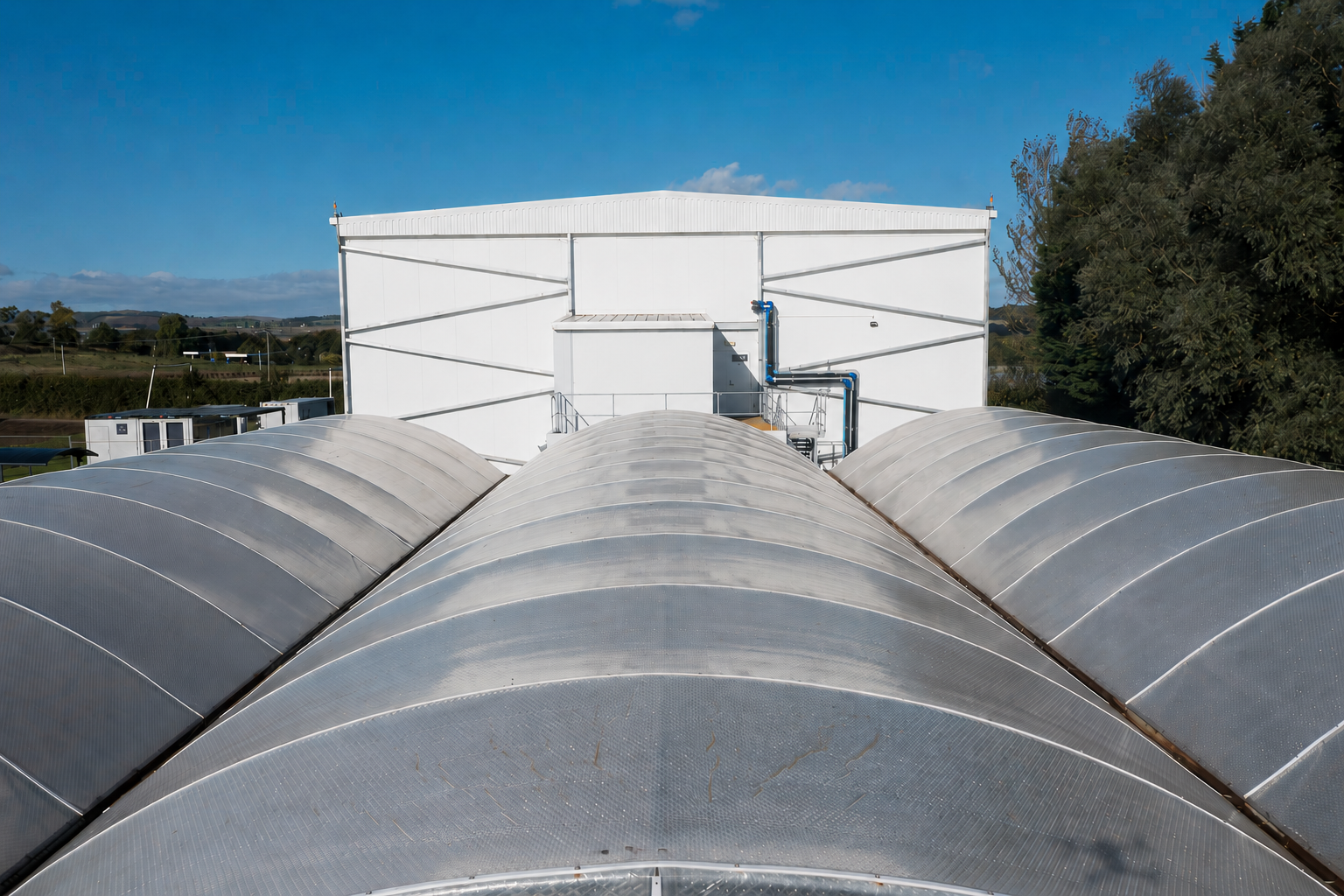
It’s not uncommon for a vertical farming project to originate from the physical site it will be built on. If that site is complete with logistical links, access to sources of energy and water, as well as labour availability and room for potential expansion, then this is a good sign it can work.
Offtakers: demand must precede supply
It’s important not to assume that produce can simply be grown and demand will follow. This approach presents significant risks, so we work closely with any prospect to ensure that they have considered how their final product can slot into the market.
A strong prospect will have either established a relationship with buyers, or have a well-defined strategy in place for securing them. They’ll understand what crops work best when grown in a vertical farm, the price points needed to achieve profitability within a given frame of time, as well as how they can integrate into supply chains. These aren’t purely theoretical points – they're fundamental to whether a project can become viable.
Authority: ability to proceed with the project
The authority in FLOAT means the ability to make decisions and move the project beyond initial plans. This could be in terms of internal agreement and governance within an organisation, or it could be in terms of stakeholder buy-in, whether from investors or a local planning committee. We look for a clear understanding of who holds the authority at each stage of project progression – this helps accelerate progress and builds accountability throughout.
Timing: why now?
Timing doesn’t refer to a project schedule – it refers to the context in which the project is being planned. Behind each viable project, there needs to be a clear impetus. This could be helping to solve supply chain disruptions through more resilient food production systems, or it could be responding to a retailer or region’s demand for locally sourced produce.
.jpg)
Understanding the context behind the project drive provides insight into both the opportunity and any potential constraints. It also helps to align expectations around the operation, working to ensure that everyone involved is on the same page.
Creating a foundation for lasting success
We don’t see FLOAT as a means of gatekeeping, more as a framework for lasting collaboration which can unlock a project’s real strengths. We look to establish where the gaps are, then work with prospects to refine their approach, develop out a robust business case, and set them up for success.
Recent years have seen several high-profile failures in the vertical farming industry, so the importance of bankable, disciplined projects cannot be overstated. If we can pair world-leading technology with finance, infrastructure, market demand, governance, and the right timing, we can put in place the foundations for addressing global challenges. FLOAT helps to make this a reality, ensuring that the right boxes are ticked for long-term growth.
Get in touch today to learn more about what goes into making a commercially viable vertical farming operation.