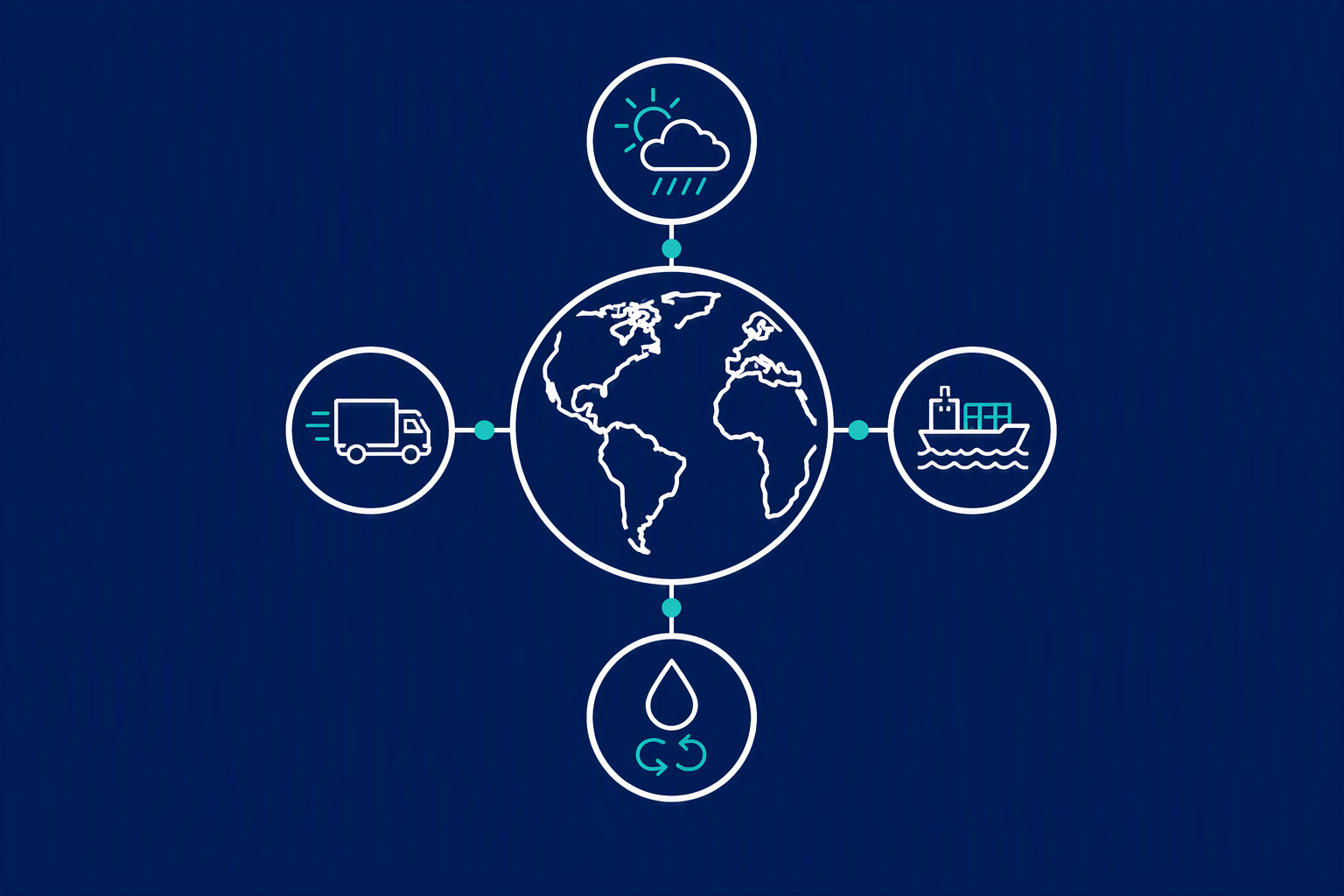


Success in agriculture depends on the prioritisation of water security in the face of resource constraints and an unpredictable climate
Water availability has always been fundamental to success in agriculture. Since the domestication of crops for agriculture, access to a reliable water supply has shaped where food is produced, what crops are grown and how farming systems develop and scale.
Water cannot be considered simply an operational input. This fact is brought firmly to the fore when you start to consider the increasing pressure on limited natural resources, growing competition between sectors (such as the introduction of water-intensive data centres), and changing environmental conditions.
With that all in mind, it’s vital that water availability is viewed as a pressing strategic business consideration for any agricultural operation – one that it pays to think about far in advance of initial production.
Water as a business continuity challenge
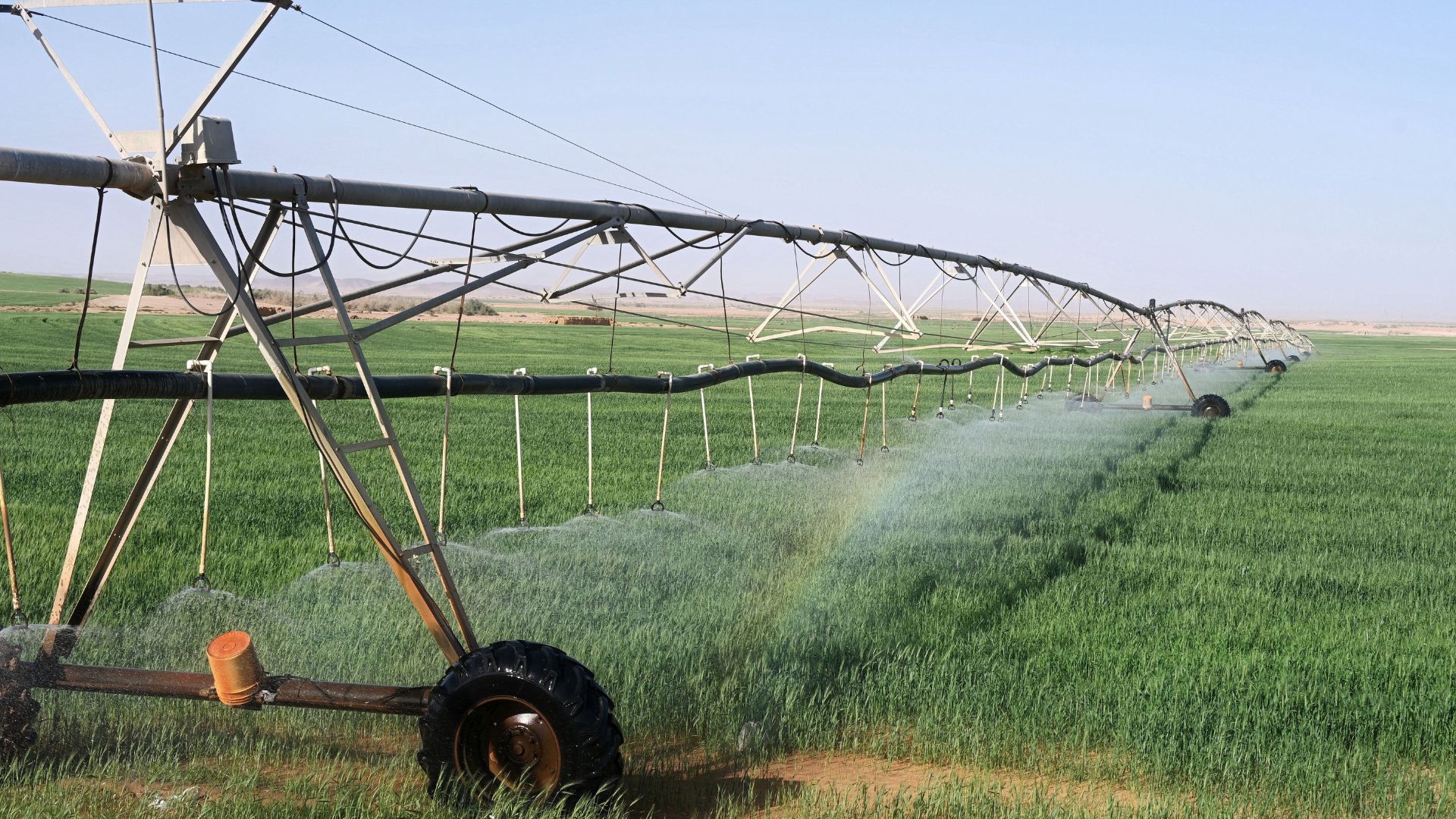
Food production depends on consistency.
Supply chains, customer contracts, labour planning and financial forecasting all rely on the ability to predict output with a reasonable degree of confidence. When water availability becomes more volatile, that predictability becomes harder to achieve.
Challenges in these areas are felt across the entire food production industry, extending far beyond individual growing operations. Food manufacturers of everything from breakfast cereal to ready meals depend on a reliable, well-irrigated agricultural supply. Retailers depend on a consistent product to sell. Investors in facilities want the confidence that assets can continue to perform over the long term. Governments and the populations they serve require resilient food systems which can still perform even in the face of disruption.
When viewed through this lens, reliable access to water becomes a business continuity issue. Growers need to look at whether they have adequate resource for their operations today, as well as forecasting what the future might hold under different environmental and economic conditions. The food production organisations best positioned for the future are those that have clear plans in place that embed resilience long before any potential water constraints materialise.
A growing consideration for investors
It’s not just growers that are paying closer attention to water resourcing.
Financial institutions and investors continuously assess external factors which can impact production, looking at general resilience alongside other commercial considerations. Investors want confidence that production systems can continue to perform even in the face of disruption. In this climate, this is ultimately what can give one grower a competitive edge over another, so any prospective investors will want to know that the business can manage risk and continue to perform over time.
Looking beyond efficiency
Historically, discussions around water in agriculture – and within vertical farming specifically – have focused on efficiency.
Growers have focused on improving irrigation, reducing waste and producing higher yields with fewer resources. These factors remain important, but they capture only part of a much larger challenge.
Agriculture accounts for around 70% of global freshwater withdrawals. At the same time, we’re faced with a growing population and increasing competition for limited resources, meaning that the way in which we approach water usage needs to change – and fast. Investment decisions in agriculture have the potential to influence production for decades. Greenhouses, nurseries, propagation facilities, processing plants and wider agricultural infrastructure are all built around assumptions regarding long-term resource availability. When access to water becomes less predictable, those assumptions become far less concrete.
This creates uncertainty for businesses seeking to expand production, secure investment or plan future growth. As has always been the case, water availability can influence where agricultural production realistically takes place. That consideration becomes particularly significant where agriculture competes with other sectors for limited resources.
How we can build resilience into food systems
Water resilience reflects a wider shift towards more predictable and resilient systems across agriculture.
Events such as the COVID-19 pandemic and war in Ukraine and the Middle East have highlighted the importance of resilient food systems which can adapt to disruption. For the food production industry specifically, these events have caused severe supply chain volatility and labour shortages. Safeguarding against future challenges has become an increasingly important objective, and water security forms a large part of that picture.
Growers can embed resilience in their operations through a number of approaches. Some are investing in infrastructure, while others are looking at crop selection and their own individual production models.

This is where controlled environment growing systems, such as vertical farming, can deliver real value. At IGS, water delivered to crops within our Growth Towers is captured, filtered and recirculated as part of a closed-loop growing environment, allowing growers to maximise usage while maintaining precise control. By applying water only where and when it is needed, growers get greater visibility over resource use and can make more informed production decisions. This can then reduce exposure to external factors that would otherwise affect planning and production.
Greater visibility and control underpin operational certainty. Rather than viewing water purely as an input, controlled environment systems allow organisations to manage it as part of a wider production strategy designed around consistency, repeatability and predictability.
Supporting more resilient production systems
No single technology can solve the global challenge of water security. However, increased resilience can be achieved by reducing dependency on factors that are difficult for growers to control, such as water availability. Alongside creating more predictable growing conditions, vertical farming technology provides growers with greater oversight of resources, leading to improved production planning and a higher degree of operational certainty. For organisations that want systems that perform over the long run, that predictability is increasingly valuable.
Preparing for the future
Agriculture has always found a way to adapt to the ever-changing conditions in which it must operate. The challenges facing the sector today may be different in scale, but the principle remains the same.
The answer to our challenges doesn’t lie in one single solution, but there is growing recognition that businesses need to look beyond short-term efficiency gains and focus instead on long-term resilience.
Book in some time with a member of our team to see how our technology can future-proof your unique operation.