

Reframing food security in a changing world
The concept of food security can often feel broad and abstract. It’s typically framed around core tenets including availability, access, and affordability, all of which are valid measures, but the reality is that it comes down to whether a nation can continue to function under pressure.
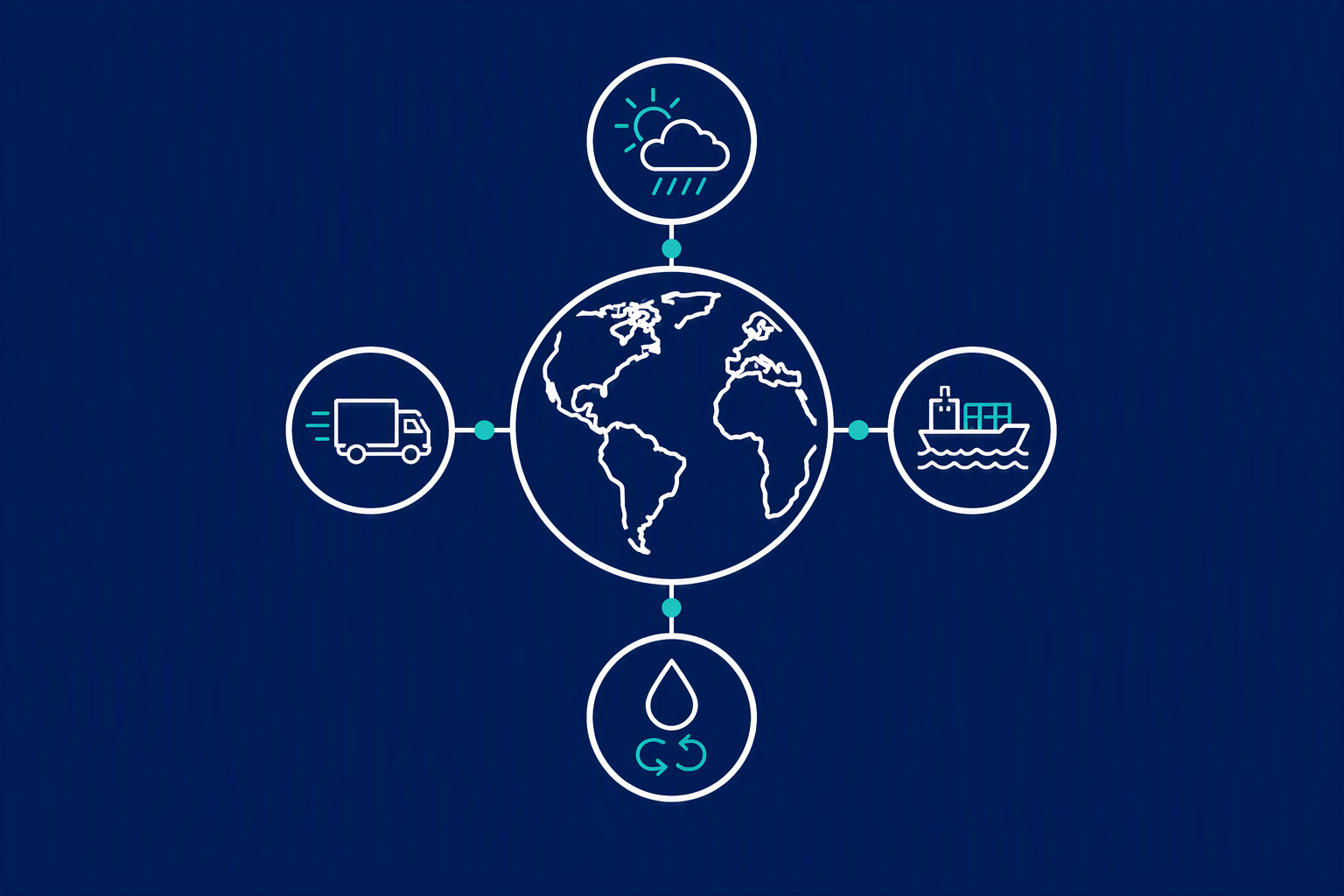
Global instability in the last decade has continued to bring the issue to the fore. From geopolitical disruption and fractured supply chains to unpredictable weather patterns and a rapidly changing climate, the systems underpinning food production and distribution are being tested daily. This contributes to price volatility and reduced access in certain regions. The question is no longer whether our systems need to adapt to ensure greater food security, but how quickly and effectively the necessary adaptation can take place.
Thinking beyond self-sufficiency
Self-sufficiency is often positioned as the primary benchmark for food security. It’s undoubtedly an important consideration, but the reality is more nuanced and must be considered on a region-by-region basis.
Few countries have the holy trinity of abundant natural resources, ideal climate conditions, and land availability needed to produce a year-round nutritionally-complete supply of food. As a result, food security requires a delicate balance of domestic production and strategic imports. The aim isn’t to eliminate reliance on global markets, but to protect from the effects of potential disruption.
This is where controlled environment growing can help. By enabling localised, consistent output of specific, high-quality crops, it can complement supply, whether domestic or from further afield. This reduces pressure on imports and reinforces local supply.
The importance of robust supply chains
If food security is the goal, then supply chains are a core element of how that goal is achieved. Global events over recent years have highlighted how vulnerable to price rises and disrupted routes these chains can be. Any delays in supply lead to shortages on shelves and, in turn, price increases.
A more secure food system looks at these systems and makes them more resilient. This is achieved by:
- using shorter, more localised supply chains when appropriate
- reducing reliance on one single potential point of failure in the chain
- having the flexibility to respond to demand shifts and external shocks
Vertical farming has a role to play here. By bringing food closer to the point of consumption, growing in this way reduces the number of variables involved in getting produce from the point of production and onto the plate. It doesn’t remove the need for global trade, but does help to create a more balanced system which is both less exposed to disruption and better prepared to cope with potential issues.
Circular systems and resource efficiency
A crucial element to building strength in food production systems is resource efficiency. Water, energy, and land are all under increasing pressure. With agriculture accounting for approximately 70% of global freshwater usage, it’s clear that we need to find a way to make smarter use of what we’ve got.

Energy price volatility is another area that warrants significant focus. When the price of gas rises, growers reliant on gas-heated greenhouses are often amongst the first to suffer. Volatility in these markets also often has a knock-on effect on fertiliser prices, resulting in a higher price for the consumer.
Systems need to be built to address these pressures. Circular operational models in which resources are reused, repaired, remanufactured, or recycled play an important role here. Inputs are tightly controlled, waste is minimised, and outputs are maximised. IGS’ technology has been designed for ready integration into wider systems that prioritise a circular approach to resource usage, as well as embedding circular closed-loop practices into its own operation. Within our Growth Towers, for example, water is recirculated and reused, nutrient solution is recycled to minimise waste, and energy costs are optimised through smart LED lighting and careful HVAC design.
Energy costs can also be managed through integrating with renewable energy sources and reducing reliance on the grid. Crop production in a controlled environment isn’t tied to daylight hours, so growers can schedule growth during off-peak hours, using surplus energy generation or making the most of reduced tariffs. This all makes for a more predictable system, reducing volatility by making growers and the systems they rely on more resilient.
Grounding in commercial realism
The issue of food security is not solved by innovation alone. It’s solved through solutions that make sense on a commercial and operational level and – crucially – can secure backing from investors. Getting this right requires a balanced approach, weighing up CapEx, OpEx, and input costs against crop selection and market demand. Not every crop works best when grown vertically, and every location has unique strengths and weaknesses.
Food production through vertical farming needs to be designed with long-term viability in mind if it’s to make a meaningful contribution to food security. When systems attract capital, operate sustainably, and integrate into existing supply chains, the potential is huge and the inherent risk around food security begins to reduce.
This approach underpins the type of infrastructure projects that we are focusing on. If we can create a system designed for the long term, this can contribute to the concept of greater food security in a way that is measurable, predictable, and sustainable over time.
Food security comes down to capability
When it all boils down to it, food security depends on how well we can execute in several areas:
- our ability to produce food consistently
- our ability to create and manage robust supply chains
- our ability to optimise and make the most of inputs, such as water and energy
- our ability to implement solutions designed to withstand the test of time
These aren’t abstract concepts. They’re tangible areas which we need to act on now. This can help create systems which can operate under pressure and provide an element of stability at a time of critical need – that's what food security means in practice.
Learn more about how controlled environment growing and vertical farming can address global challenges through our blog series.